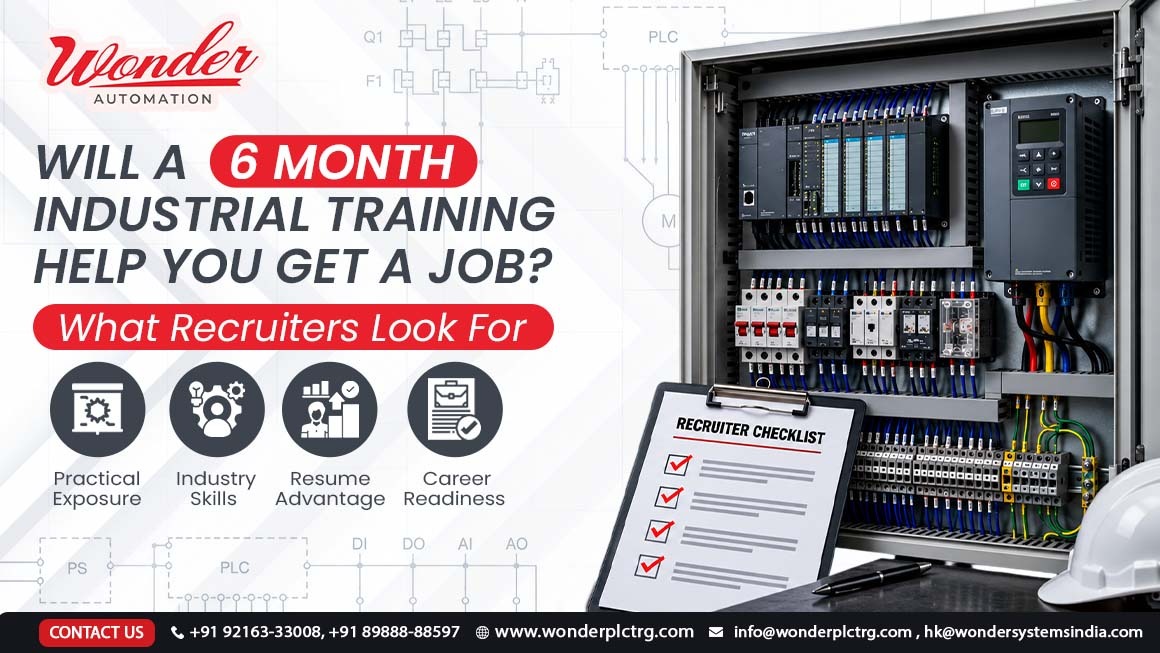
6 month industrial training – In today’s job market new engineering and technical graduates often wonder how to connect what they learned in school with what is needed at work. Signing up for a 6 month industrial training program has become a way for people who want to get ahead and catch the attention of hiring managers. This blog will look at how a longer practical training period affects your chances of getting a job and what modern employers really care about when they choose who to hire.
Extended Practical Learning: What It Means and Why It Matters
Before talking about how practical programs affect job chances it is important to know what these longer learning experiences are. Traditional education focuses a lot on theory, formulas and tests. While it is good to have knowledge it doesn’t usually get a graduate ready for the real problems they face on the job.
Extended technical mentorship helps close this gap by putting students into situations. Of just reading about how things work people get to use real machines fix problems and do case studies. This kind of experience turns a student into a person who can solve problems and knows what is expected in the industry.
Bridging the Skills Gap: Core Competencies Employers Value Most
Hiring managers in modern manufacturing, automation and technical fields are not usually impressed by a resume that only has theory. They want to see that someone can do the job and think on their feet. When you spend time in a 6 month industrial training program you learn important skills that school rarely teaches.
Key Technical Skills Gained
- Live System Operation: Working with machines, controllers and equipment.
- Fixing: Finding problems fixing mistakes and making changes.
- Combining Areas: Learning how mechanical, electrical and software parts work together in a factory.
Transforming Resumes: Capturing Recruiters’ Attention
A resume is your chance to show your skills and hiring managers look through many of them every day. Traditional grades look the same. Real project experience makes a difference.
Why Project-Based Portfolios Matter
- Proof of Work: Listing the projects done during the 6 month training gives interviewers something to talk about.
- Less Training Needed: Employers like people who need time to get up to speed because they already know the tools.
- Shows Hard Work: Spending half a year on training shows a lot of effort focus and love for the job.When people can talk about the challenges they fixed or the systems they built hiring managers see them as choices who are ready to work.
FINAL THOUGHTS
Getting a technical job needs more than just a degree; it needs real skills hands-on experience and knowledge of industry standards. Doing a 6 month industrial training program gives you the skills, confidence and projects that employers look for. By connecting what you learned in school with work you become someone who can help right away. To move forward in your career and get good job opportunities look into the engineering programs that Wonder Automation offers.
FAQs


Wonder Automation is an industrial automation training institute in Mohali, Punjab and has more than 30 years experience in the industry. We focus on the training of PLC programming, SCADA, HMI and automation system.
We aim to fill this gap between the academic studies and industry demands with practical, project based courses. We have convenient schedules, professional training by qualified engineers, and placement facilities to students and working professionals.